Low Impact Development and Naturalization
Community Land Restoration Project
Native planting and pollinator habitat - Maryann Lane, Norwood

The project area - Phase 1 is the roadside swale, with the adjacent catch basin a future phase.
What is happening here?
The no-mow area along the swale on Maryann Lane is intentional. This is an active community restoration project, endorsed unanimously by the Council of the Township of Asphodel-Norwood on June 23, 2026, and led by the Norwood and District Horticultural Society in partnership with the Township.
Native plants and pollinator habitat are being established on Township green space, creating a self-sustaining ecological corridor that supports bees, butterflies, birds, and clean water for generations to come. The project begins with the roadside swale and will grow over time, both along the length of the swale and, in future years, to include the adjacent stormwater catch basin.
Over 1,000 m²
being restored in the first phase
Phase 1
Roadside swale (allowing for future extension and a catch basin)
5+ yrs
to self-sustaining habitat
No ongoing cost
to the Township for routine maintenance
How it unfolds
Restoration is not an overnight process. It unfolds season by season:
Getting started:
identification and monitoring. Invasive plants reduced. First native species introduced along the swale.
Building the landscape:
native planting expands each season. The swale becomes a recognisable, designed native landscape.
Maturing:
the planting becomes self-sustaining, with no mowing and no routine maintenance cost. A living habitat that looks after itself.
Looking ahead:
in future years we hope to extend the work further along the swale and to the adjacent catch basin, and to mark the Norwood and District Horticultural Society’s 40th anniversary in 2032 with Maryann Lane established as a community nature landmark.
What this could look like over time
Restoration takes time. The photos below show a naturalized stormwater landscape at Sherbrooke West in Peterborough, several years after native plantings were established. While every site is different, these images give a sense of the naturalized appearance and habitat value we expect at Maryann Lane as native plants take hold over the coming years.
These photos are provided as an example only. Photo credit: courtesy of Drew Monkman. Used with permission.
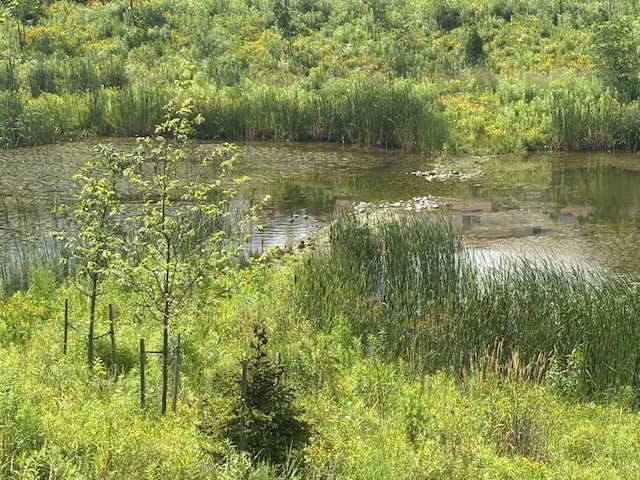
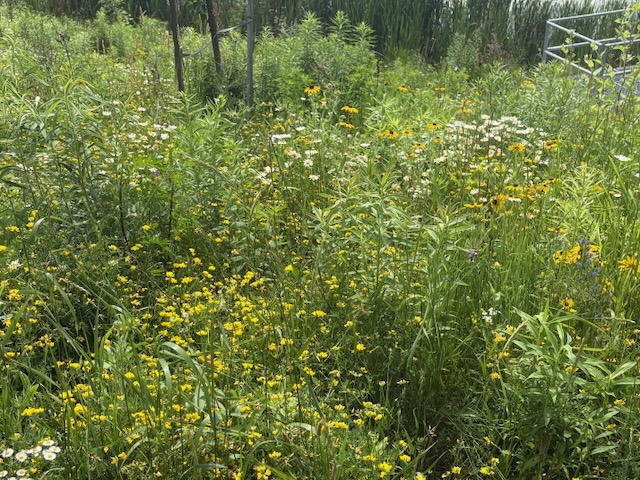
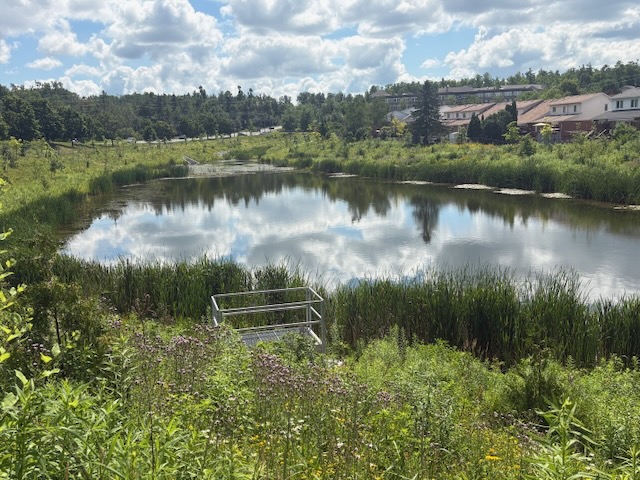
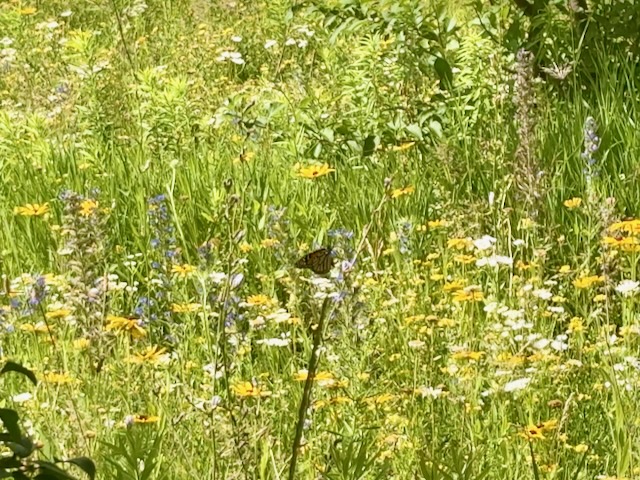
These photos are provided as an example only.
Why this matters
Pollinators
Bees, butterflies, and moths
Birds
Nesting and foraging habitat
Clean water
Native roots filter stormwater
No mowing
no ongoing routine cost
Education
Students and community
Replicable
A model for other sites
Help Document the Restoration
Community members can help document the plants, insects, birds, and other wildlife found at the Maryann Lane restoration site through iNaturalist.
Take a photo or record a sound of an organism observed within the project area and upload it to iNaturalist. Qualifying observations will contribute to the Maryann Lane Land Restoration project, helping to create a record of how the site’s biodiversity changes over time.
Visit the Maryann Lane Land Restoration project on iNaturalist to explore observations from the site. Community members can also download the free iNaturalist app to photograph and submit observations while visiting the project area.

Please note that iNaturalist is an external platform. Users must create or sign in to an iNaturalist account and are subject to its terms of use and privacy practices.
Research and resources
This project is grounded in published research on native planting and stormwater naturalization. These organizations have implemented and documented similar approaches across Ontario and Canada:
Pollinator Habitat
Local expertise in native plant restoration in Ecodistrict 6E-8.
Ontario Invasive Plant Council
Best practice guidance on mechanical management of Phragmites, Reed Canary Grass, and Purple Loosestrife - all present at Maryanne Lane site.
Otonabee Region Conservation Authority
Our local watershed authority, supporting the project with endorsement and stewardship guidance.
Ontario Horticultural Association
Norwood and District Horticultural Society is a member of the Ontario Horticultural Association (OHA).
OHA supports community-led native planting and pollinator garden projects across Ontario.
Questions about this project?


This page will be updated as the project develops. | Last updated: August 2026